LED ZEPPELIN - WHATS YOUR FAVOURITE FESTIVAL APPEARANCE?

'I told Pagey one or two people would be here, but he said he doubted that very much' Robert Plant, Knebworth August 4th 1979 ...

Monday, 7 January 2019

JOHN PAUL JONES


The Quiet One. Jonesy. The cornerstone of Led Zeppelin. As a band of equals, they had four distinct and equally important personalities, their individual traits that would intertwine so gloriously and uniquely to create the whole. Time after time, John's contribution would be subtle, imaginative and crucial to that aural palette. 


But Led Zeppelin is only part of the picture, 12 of  the 56 years and counting John has been a professional musician. From learning the ropes on tour with his parents playing Big Band to Vaudeville John graduated to session work. Wanting to play bass, his father Joseph tried to persuade him that Cello or Piano was the way forward, regarding Electric Bass as 'a fad that will be forgotten about in a year or two'. He happily relented after four words from his son - 'There's work for me'.


Session work in the 60's was insular and lucrative. A small band of musicians would criss cross the capital up to 3 times a day. A typical day would involve three such sessions, usually about 3 hours each, the first beginning at 10am, the second at 2.30 and the third at 7pm. The 90 minute gap would soak up (expensive) over runs and set up for the next artist and assorted backing musicians. From Hampstead to  St. Johns Wood, Marble Arch to Barnes, John would add his musicianship and very quickly arrangement and production skills to a wide variety of artists. 


Many would remain nameless or forgotten in the whirlwind of the time. Others would become stars, household names even. Mickie Most, Tom Jones, Petula Clark, Dusty Springfield, Donovan, Herman's Hermits, Lulu, The Rolling Stones... And on and on.


With such a clique of session musicians, prowess rose to the top very quickly and John (like Jimmy Page) was in high demand. His playing and arranging embellished songs from Downtown to Hurdy Gurdy Man, To Sir With Love to She's A Rainbow.


John even had the opportunity for a solo single, Baja/A Foggy Day In Vietnam on Pye Records in April 1964, early on in his session career. Some sessions would be with new on the scene guitar slinger Jimmy Page, from Donovan to Francoise Hardy to Jeff Beck.

The Beck sessions for Hi Ho Silver Lining and Beck's Bolero would bring together a bunch of musicians musing over a supergroup Keith Moon would jokingly christen Led Zeppelin. The sessions for Beck's Truth LP also included a brief take on You Shook Me highlighting Jonesy's growing keyboard prowess. Listen to some of John's session work and you instantly become aware of a clear, perfect musical ear, a triumphant and easy way with perfect pop and melodic arrangement. 'If you really listen to a song it writes itself' was his dictum.


One pivotal session was arranging the Cello's for Mickie Most's session of Little Games by The Yardbirds, another meeting for John with Jimmy and the honing of a friendship that would grow into a very bountiful musical connection. By 1968 the session world had changed. More musically adventurous artists were playing their own songs, the 'Pop Star' being pushed more into the background and the demand for session musicians too. And John had had enough. His only live work had been with Dusty Springfield as part of her backing group during her Talk Of The Town residency in Leicester Square, where incidentally Madeline Bell was a backing singer. Now he wanted some musical freedom, the road, a band.


He did play bass on Madeline's '68 LP 'Doin' Things', and they were by now firm friends. When Zeppelin flew to the US two days before Xmas in '68, the rest of the band flew on to LAX while John and Maureen stopped off in New York to spend Xmas day with Madeline.

So came Led Zeppelin. Even if his musical journey had stopped in 1968, John Paul Jones would have left a wonderful legacy and body of work. The fact he was to be a member of the biggest band of them all and THEN go on to another 4 decades of ground breaking and always interesting and unique music says so much.


We all know of his major part in Led Zeppelin. The strident bass that underpins Good Times, the fluid no messing flurries that underpin Dazed and the flourishing fanfare that starts side two of the debut LP. With songwriting credits on 40 odd songs in Zeppelin's arsenal, his influence and presence were vital and perfect. Within months he'd laid down two of the most breathtaking bass performances on record ever - The Lemon Song and Ramble On. Lyrical, harmonious and percussive and rock solid at the same time. Locked in to that Bass Drum, that syncopation.


As Zeppelin spread their wings as the 70's dawned he gradually came into the spotlight with an Organ Solo in the middle of the set. On 'III' he helped shape Celebration Day, The Stomp and Since. Live his unique,  telepathic communication with Bonzo and their empathy with and behind Jimmy and Robert was to cement Led Zeppelin's reputation as THE live band of the age. By the tail end of 1970 John brought both the impossible bass line and structure of Black Dog and the kernel, albeit jazzier and faster, of No Quarter. His studio knowledge and melody greatly influenced MMHop and the delicate introduction of Stairway.


Playing material from 'IV' plus an acoustic set gave John more variety onstage, and by the time the LP was released he would be seen on bass, keyboards, acoustic guitar, mandolin and even his 'Tupenny Upright' bass. As Zeppelin strode on the material for 'Houses' was more diverse, sophisticated and challenging than ever. His beautiful orchestration and subtle, joyous piano on Rain Song is sublime, faultless. Elsewhere there's the fabulous Synth twists on Dancing Days and the James Brown nailed down dance riff of The Crunge. No Quarter would stand alone as a stark, isolated statement that would expand into a sophisticated and never ending journey by the time Zeppelin returned to the stadiums of the United States.


During that 9th US Tour John switched between electric Piano and Mellotron, and without an acoustic interlude treated us with some unusually upfront bass work on the few occasions he pulled out his 5-string Bass. No Quarter was varying from 9 to about 15 minutes at its' longest on this tour, and John was on keyboards for about 30% of the time.


When the tour finished Jonesy kept busy, playing on and producing Madeline Bell's 'Comin' Atcha' LP, recorded at his own Doormouse Studio. He even appeared with her on her BBC TV show 'Colour My Soul' on December 12th. After filming his parts in the movie came the first of two bursts at Headley Grange where the 8 new tracks for Physical Graffiti were recorded. As 1974 rolled on he popped up at Hyde Park with Roy Harper and Dave Gilmour, having guested on Roy's 'HQ' LP.


The PG sessions were sensational, Jonesy's 'sickness'/'rest' not withstanding. His memorable Clavinet on Trampled and synth and electric Piano work on the electronic opus In The Light still send shivers as does his orchestration on Kashmir, so far down the road from She's A Rainbow!


For the '75 shows No Quarter became one of the two main sources of improvisation and inspiration, dominating the opening part of the now 2 1/2 to 2 3/4 hour shows that climaxed with a sometimes too long and leaden Dazed and the de rigeur set closer Stairway. Beginning at the same length as '73, the addition of a Grand Piano half way through the tour helped it stretch both musically and in length.


Along with Rain Song, Kashmir, Trampled and Stairway (and SIBLY on 3 occasions) John spent much of the middle part of the show seated. Still only 1/3 of the show, but at least an hour at this point! At Earls Court it was a highlight, and the returning acoustic set showed his dexterity and sublime ease with whatever the band threw at him, including 4 part harmony on Tangerine!


John's steadfast and exemplary work on Presence is stunning, especially the strident 8-string on Achilles. The beautiful soundscape outtake 10 Ribs & All/Carrot Pod Pod was a completely unexpected highlight of the Munich sessions. And the 1977 Tour had an even more complex and improvised No Quarter, two sections including a Boogie Woogie motif that heralded a bone crunching Nutrocker on a few nights half way through the tour.

By now he was playing so many different roles onstage Robert referred to him as 'Man Of The Match'! Vocals, guitar and Bass Pedals on Battle Of Evermore take that to the extreme... And right up until Berlin John played his usual key role as the anchor on one hand and almost musical director on the other.

After Zeppelin John returned behind the scenes, spending time with his family in Devon. And since then he works when he wants with who he wants. So talented. Aware of his legacy and body of work but not dragged down by it in ANY way. Always looking forward yet with respectful and proud nods to what he's done before.


Work with Brian Eno and The Mission, who he produced and jammed with. More Soundtrack music on 'Scream For Help' where he teamed up with Jimmy Page once more, a far cry from his arranging of the 60's film  Mrs Brown, You've Got A Lovely Daughter with Peter Noone and Herman's Hermits! When Zeppelin were giving Robert time to consider his future before the Knebworth return he joined Bonzo guesting with Wings on the Rockestra project as part of the Back To The Egg LP and was involved in Give My Regards To Broad Street.


Loved his jams with Ben E King and Lenny Kravitz, working with the Butthole Surfers and the fantastic LP and shows with Diamanda Gallas and Pete Thomas. His two solo LP's Zooma and The Thunderthief are spectacular and innovative, moving as always in new and surprising directions.


Be it Sarah Watkins, Julie Felix, Ben Harper, Supersilent, Seasick Steve or Them Crooked Vultures, you can be sure John Paul Jones will retain that individuality, that calm and measured approach that yet breaks moulds and turns heads and ears. Long may he reign...


And as a footnote, you can't forget John's dry humour. From the unconnected 'phone on the Yamaha at Knebworth to sharp interview answers across the globe and years he's been been always amusing and observant. When talking about the first Zeppelin rehearsal John once said 'Robert hadn't met me before and heard I was a session player. I don't know if he was expecting some old bloke with a pipe and a copy of the Golfing Times! Well, I didn't have a pipe...'
,


Saturday, 6 October 2018

EVENINGS WITH LED ZEPPELIN


Now the 50th is upon us, celebrations for fans old and new are now reaching a fair pace. Already I've added two exceptional publications to an increasingly creaking book shelves, and this mighty tome completes something of a holy trinity. I have known Dave Lewis for 30 years now, from when I collaborated on his 'A Celebration' book. Fast forward to today and the amazing growth of knowledge, memorabilia, recordings and film - and the volume of official releases - is astounding. 
  

First impressions are simply this - stunning. Weighing in at a hefty 576 pages, it really is special. From the incisive foreword by Zeppelin tour manager Richard Cole, it immediately becomes compelling. Two prologues follow, the first covering the years 1958 to 1967 and focusing on  the individual members activities. The second is a fascinating and excellently detailed history of 1968, with tour dates from The Yardbirds, Band Of Joy, Obs-Tweedle and best of all more than 20 shows Bonzo played with Tim Rose during the spring and summer of 1968.

The detail and the passion is what sets this book apart. There are 516 confirmed shows, 6 unconfirmed, 11 sessions and TV appearances and 86 cancelled shows all given a microscopic analysis, to the point where almost 400 - including 19 cancelled shows - have ticket stubs illustrated here. Just confirming the detail and unending search we've all been on for (much of) the last half century.

Photo's of venues, both outside and inside, flyers and programmes illuminate the evocative text for every entry. Some wonderful pictures - the four pictures from the Kinetic Playground, Chicago on May 23/24 from the late, great Howard Mylett collection on page 103 spring to mind - help to bring the story, the journey to life.

Cross referencing the audience, radio and soundboard recordings brings a direct link for those that focus their collecting on the audio side of Zeppelin, aided by reference to the various 8mm cine film and broadcast visual clips that have surfaced in the last half century.

Alongside Luis Rey's recent 5th addition 'Evenings With...' makes you want to reach for that LP, that CD, that tape and delve and relive the power, mystery and the hammer of the gods. And one of the biggest compliments I can make is inside all of this the text is not dry and unerring. Dave and Mike have made it interesting, alive and beguiling. Unlike so many reference books that leave me cold and read like a phone book, this is bright and sparkles.

Drawing from so many sources of inspiration over this long and never ending Led Zeppelin journey, they've strived to and achieved a fantastic database (for want of a better word) of those wonderful Evenings with Led Zeppelin. Taking a step back you can only marvel at their inexorable rise from unbilled opening act to stadium headliners, from hungry young men knocking at the door of the late 60's headliners to the biggest band in the World.

There are some contentious dates and venues, which some of us will debate long into many a long night with a beer and a quizzical look, but Dave and Mike know more than enough to explain and elucidate their reasons for placing of shows such as Boston 25/1/69 from 28/5/69 and their argument is both understandable and compelling.

Evenings with Led Zeppelin works on so many levels. In 2018 we've heard, seen and learnt so much since those halcyon days of Howard's first book, the at the time ground breaking A Celebration and the next level compendium The Concert File. As with every Zeppelin publication it's almost immediately outdated the moment it goes to print, as it is with Luis' Tape Documentary, as just one newly surfaced recording or ticket stub gives us new information or questions old truths.

This book is an utter triumph, a vast pool of knowledge and amongst the finest publications on ANY band, let alone those myriad of tomes about Led Zeppelin. Very few books are completely essential. This is...


Sunday, 9 September 2018

LED ZEPPELIN - THE MARQUEE


The Marquee celebrates Led Zeppelin at Fifty

Such a milestone deserves much celebration. So many pivotal and important moments, from live shows, Recording Studios, TV and Radio Broadcasts and more besides. And Friday October 18th 1968 is one of THE most pivotal and indeed important milestones.

It was very early days for Bonham, Jones, Page and Plant. From the life changing excitement and hysteria of their initial meeting and rehearsal in Gerrard Street (or Lisle Street, as Zep author Dave Lewis was told by Jonesy) Chinatown in mid August Jimmy gathered them together at his Thames side home in Pangbourne to 'routine the numbers' as he later recalled. 10 shows in Denmark and Sweden, although new information puts that 10th show in Malmo as doubtful (the venue closed months before), were the hangover from the last Yardbirds commitments, packed into an 11 day burst from September 7th to 17th. Within a week or so the as yet christened 'New Yardbirds' were focusing their energy and musicality in Olympic Studios, Barnes and by the second week in October had more than enough for an LP that was to change history.


The sessions were interrupted for a trip to Newcastle on the 4th to play the Mayfair Ballroom, the first of a slew of British shows pieced together by Peter Grant while the band were ploughing through those first Scandinavian warm-ups. Years later he remembered how hard it was to get venues, to work, to play. The original contract for the October 18th show was drafted on September 13th, when the erstwhile 'Yard Birds' were performing for the 7th time at the Inside Club in Stockholm.


With the recording sessions wrapped up the next show was to be The Marquee. Billed as 'The British Debut of The Yardbirds', a Marquee press release refers to them as The New Yardbirds, adding 'Fittingly their British Debut is at the Club'. Jimmy had made his debut with the Yardbirds on Bass back on June 21st 1966, but this was to be a completely different animal. 

You have to remember that the band was yet to confirm their name. All paperwork was labelled The Yardbirds/RAK Management/Mickie Most, showing one of the first signs of the total control over business and musical destiny from Jimmy and under his instruction, Peter. Even the 1" blue tin boxes that carried the precious and soon to be groundbreaking Olympic recordings refused to reveal their new chosen identity.


So what would the Marquee regulars, long standing Yardbirds fans and the curious experience that Friday night? There is much speculation and very little hard evidence of those pioneering British shows. In fact, outside Jimmy's archive only 1 show (Spokane, WA December 30th) exists from 1968, and half an hour of (glorious) outtakes and alternative versions from the Olympic Sessions. Recordings do exist, when Jimmy and Peter flew to New York to cement a deal with Jerry Wexler at Atlantic Records they travelled armed with Acetates of songs from Olympic along with 'rehearsal and live recordings', almost certainly from Pangbourne and Scandinavia.


For the Marquee debut, and indeed their return on December 10th - 54 days and 8 gigs later - the set would have been a short burst, yet still able to showcase each member. Based to run an hour or so, sometimes longer on any given night, all but the opening track of each side of 'Led Zeppelin' would feature, alongside two solo spots, a cover version or two and the burgeoning improvisation that would set Led Zeppelin so far apart from the rest. I would surmise the October to December pre-USA shows would be chosen from the following:-

The Train Kept A-Rollin'.
A great, solid opener. Classic Yardbirds arrangement of this Bradshaw/Mann/Kay rocker. Bonzo would kick things off before Jimmy and Jonesy crunch down on the G to A riff before Robert soars over the top. Early 1969 tapes show this to be a perfect opener to get as good a sound balance as possible, even with the primitive PA systems of the time.

I Can't Quit You.
Linked without a pause after TTKAR via a simple yet effect blues motif, then comes a pause for Robert to begin their muscular yet deft arrangement of a Willie Dixon song, even if Jimmy leans much more heavily on Buddy Guy's riffs and pauses. Jimmy had in fact played on the session with Savoy Brown Blues Band, released in August of'66.

Already the syncopation and groove is palpable. Bonzo's use of dynamics and space is breathtaking here, underpinned by understated and solid bass figures by Jonesy, who recalled he never played blues before joining Zeppelin, making his contribution all the more remarkable. Also the first example of Robert's encyclopaedic Blues and Soul repertoire, early live performances attest to the number being stretched and mutated to include lyrics and pieces of songs like I Don't Know Which Way To Go, It Hurts Me So and Nineteen Years Old.

Dazed And Confused.
Like TTTKAR, a song brought through from the Yardbirds. Unlike Train, this is the beginning of an incredible musical journey. Discovered as I'm Confused, a menacing acoustic dirge by Jake Holmes in '67 that Jimmy had discovered on the 'Above Ground Sound of Jake Holmes' LP, plus he opened for the Yardbirds in Greenwich Village at that time.


By the end of the 'Birds it had new lyrics and a strong powerful arrangement. By the time they got to Olympic, Led Zeppelin had transformed it completely into 6 and a half minutes of mind blowing psychedelia. Jimmy had always said he wanted to create a Symphony with different movements, and here he has. Even in these very early days you could expect 10 minutes or more, including a longer more dramatic introduction, an elongated Bow episode and a spaced out finale. Even the post-Bow thousand notes a second solo, pulled from Think About It, stretched and twisted snake like over what was quickly becoming the most potent and powerful rhythm section of them all.

You Shook Me.
More Willie Dixon and a reminder that for all the possibilities and avenues Led Zeppelin could and would explore, they were still aware of the cornerstone of it all - The Blues. Another Willie Dixon classic, and a heavy sexy blues sludge. With very few exceptions John Paul would not have a Hammond Organ onstage, so the arrangement was solid and heady, instead giving Robert the chance to show off his Harmonica licks before Jimmy soared with an extended solo. The unaccompanied guitar/vocal call and response coda was a moment of high drama too, as Robert could effortlessly soar above the highest note Jimmy could wring out of his Telecaster!

White Summer/Black Mountainside.
A showcase for Jimmy, and another Yardbirds arrangement. Stretched to include moments of Black Mountainside and Bert Jansch's Kasbah, it could run up to 10 minutes depending on mood and set restrictions, and if John added thunderous percussion to turn it into a near riot onstage.


Babe, I'm Gonna Leave You.
Played if time permitted, with a simpler arrangement to the soon to be released version. Restricted by just one guitar and no backing vocals, Zeppelin's sheer dynamics pull this off even if it lacks the acoustic/electric light and shade juxtaposition of the LP version.

As Long As I Have You
Fantastic soul single by Garnett Mimms. This would run for anything up to 15, even 20 minutes as it segued into Fresh Garbage (Spirit), Bags' Groove (Miles Davis) and Sam Cooke's Shake plus whatever else came into their frenzied imaginations. A fantastic, loose marathon. It was in the set list for those Scandinavian shows, and was another cover song Zeppelin took to a whole other level.

Flames.
A song by Elmer Gantry's Velvet Opera. Probably recorded during the Olympic sessions, much like Baby Come On Home at the end of the famed 30 hours it took to lay down the first LP. Jimmy confirmed on his website this was included in the set at the first show on September 7th in Gladsaxe, Denmark.

Pat's Delight.
Early showcase for John Henry Bonham. Named after his wife, the solo construction is similar to that used in the shorter late 1969 performances of Moby Dick. The intro/outro riff is different, lighter and with more of a 'sixties' feel than the darker and heavier crunch of Moby Dick. Already a highlight in the set, overflowing with power and excitement, it would give John 10 or so minutes in the spotlight. Even at this early stage the 'hands no sticks' section was leaving audiences gasping...


How Many More Times.
The usual set closer. Jimmy had introduced a swinging, almost Jazzy arrangement of Smokestack Lightning to the later Yardbirds live show, and early versions of HMMT began with that distinctive snaking riff. Beginning quietly, Robert would become MC and introduce his mates to the audience, some of whom were probably still Dazed and Confused by the inclusion of only 1 actual Yardbird in the line up. As the show climax, this had the kitchen sink and a whole lot more besides. Mutated from Howlin' Wolf's How Many More Years, there's a section of Bolero before it descends into another Bow episode, where Robert would answer Jimmy's squeals and drones with vocal ad-libs of Shapes Of Things and Over Under Sideways Down in between moans and screams. Then we're into The Hunter, Albert Kings predatory classic where Robert primes his lovin' gun, even drifting into a snippet of self parody with snatches of The Lemon Song. As Zeppelin hit the home strait we even get the Barrelhouse lyric reference from Robert Johnson's Travellin' Riverside Blues. A show stopper, a hybrid of blues, psychedelia and more, and the way Led Zeppelin said goodnight.

Communication Breakdown.
The usual first encore, sometimes used as an opener as well. Proto-Punk meets Eddie Cochran and nigh on invents Heavy Metal! Close to the recorded version in arrangement, Jimmy would rev up the band with an extended introduction before lift off. Another moment of high drama and power, Robert's unearthly screams the icing on the cake. The usual way to round off the night

For Your Love.
Another Yardbirds classic, slowed down to a Hendrix influenced grind, with more than a passing nod at the future arrangement of Killing Floor. Would have been an (occasional) encore during those early shows, in particular if Communication was chosen to open the set.


And there we have it. 60, maybe 75 minutes of prime, potent early Zeppelin. Both 1968 Marquee shows would have the same basic structure, plus the addition of some guitar free Harmonica jamming should Jimmy break a string during the early assault. One review of the December 10th show talked of Led Zeppelin being 'too forceful', and a need to 'cut down the volume a bit' even if there was praise for the Bow episode in 'Days Of Confusion'(sic). 4 more British shows would follow over the next 10 days before Led Zeppelin headed off to the West Coast and fame & fortune. For those lucky enough to have been at either of the '68 Wardour Street shows it was a never repeated experience of seeing a fledgling band bursting through like no other either before or since.


Fast forward to March 1969. Led Zeppelin's 3rd UK tour would bring them back to The Marquee on March 28th. In this short space of time they already had played 64 gigs, 2 BBC Sessions, 3 TV appearances and 2 filmed performances (one live, one mimed) under their collective belts.


Once again, a press report of the march show in Melody Maker adds to the confusion and legend, noting that not only did they play two encores including 'The Train', but did so to a crowd of 1800!


Of course the Marquee gig was one of 14 UK shows in just 27 days and all would be single set blasts. Only when they returned to the US would the 2 set  marathons start to take shape. The next London show would be at the Royal Albert Hall, then the Lyceum Ballroom and a return to the Albert Hall. From there on it was  onwards and upwards to The Empire Pool, Alexandra Palace and Earl's Court. Led Zeppelin's days on the Pub and Club circuit were well and truly over, or  so it would seem. 


But, as they set about plans for gigs and tours in 1971 the idea was discussed to go back to their roots in the UK, back to those venues that had booked them from the off. Perhaps overwhelmed at the size of some of the US Stadia they'd risen to in such a short time, they wanted to get up close and personal again. Stung by the harsh treatment of 'III' and buoyed by the fantastic new songs they'd written for their next 4th LP, they looked to the fans.


12 shows in 19 days, from Belfast to The Marquee via Dublin, Bath, Nottingham and and 7 more around the UK. Tuesday March 23rd was the date for Led Zeppelin's 4th and final appearance at The Marquee.  It had only been 5 days short of 2 years since that last gig, but Zeppelin were a completely different animal. Only two songs remained in the set from those early days, plus Bonzo's showcase. 2 years older, wiser and more confident. In those 725 days between Marquee gigs there had been 5 American Tours alone, almost of 200 shows and two more LP's released and another very much in the pipeline.


Although we sadly have no recordings of any of The Marquee shows, the set would have almost certainly been very similar song wise as their very next show 9 days later at the Paris Cinema, Lower Regent Street recorded for the BBC and less than half a mile away. Here's the probable set list-


Immigrant Song/Heartbreaker
Since I've Been Loving You
Black Dog

Dazed And Confused
Stairway To Heaven

Going To California
What Is And What Should Never Be
Moby Dick

Whole Lotta Love + Medley

Encore -
Communication Breakdown


Also That's The Way, Rock And Roll, Thank You and possibly Bring It On Home were featured in the set or as encores at this time. A show fit for a stadium played for a very lucky few hundred fans in a packed club, a venue of such status and legend and with such history it's only fitting that The Marquee would host their last ever 'back to the clubs' show.

Tonight marks 50 years since that first appearance. This celebration aims to showcase and highlight the energy and power of that initial burst, and also the incredible leap in songwriting and performance Led Zeppelin achieved by the time of that final 4th appearance. I hope you enjoy this evening and reflect on a time when the greatest live band of the Rock era - Led Zeppelin - played four memorable shows at the greatest club venue of the Rock era - The Marquee.

Andy Adams, August 2018

Special thanks to Michael Starke for photographic research. 

Photo credits (where known) - Eric Hayes (march '69), D Tarle (dec '68) andB Norman (march '71)

Copyright Andy Adams/Tobear0ck, 
no reproduction in part or full
without permission.

Monday, 30 July 2018

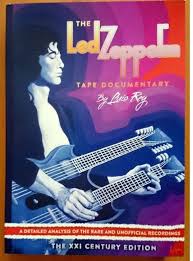
THE LED ZEPPELIN TAPE DOCUMENTARY by LUIS REY - REMASTERED 50th ANNIVERSARY EDITION


50 years of Led Zeppelin. The mind boggles. So much time has passed in the blinking of an eye, a moment in time. It's hard to believe I first met Luis 31 years ago, at a Record Fair in London's West End. By chance, but maybe some kind of destiny. Immediately we had such common ground, and a shared love and enthusiasm for what made Led Zeppelin unique - their live performances.

Back in 1987 Led Zeppelin were largely reviled by media and more besides. The Heavy Metal monster they had been largely responsible for had become not only mutated but watered down, and the musical climate had them out of favour. It took the 1990  6LP/4CD Box Set and the ensuing MTV led publicity to see their music and legacy in a much more relevant and positive light. 


And in 1991 the first edition 'Led Zeppelin Live' was released by Bob Walker through Hot Wax Press, with two updates over the next six years. With the burgeoning Bootleg CD market Luis' work became an essential guide and companion to discovering and enjoying the underground recordings of Led Zeppelin.


Fast forward to 2017, and I was invited to join Luis in a Q&A at the O2 10th Anniversary gathering in London. It was there, meeting for the first time in almost 15 years, we discussed this project and a new edition. And here it is. What more can I say that if you collect the music of Led Zeppelin, it's as essential as any book published past and present. It's been a pleasure and an honour to be very much involved in this edition, and seeing how it's turned out is exciting to say the least.


So what can you expect? Those of you familiar with previous editions will know the format, the focus and detail in every page, every entry. As more information comes to light about dates, venues, obscure and sometimes barely listenable song references, 8mm and professionally shot footage, new Bootlegs etc it's painstakingly added, amended and updated to what was already a very impressive body of work. The cream is obviously more discoveries, either unheard documents or alternative source tapes of already known shows and sessions and there's a treasure trove here. Add to that some wonderful illustrations of bootlegs, ticket stubs, posters, press cuttings and more. 


Coming in at 556 glorious pages, we begin with a chronological history of all the documents we could find, from September 27th 1968 to July 7th 1980. Over 464 of those pages 330 shows, outtakes and more are reviewed in exceptional detail, bringing as much information as possible alongside comments about each and every one, in such an engaging and vivid way it really makes you want to reach for each and every recording and immerse yourself within it once again.

There's a detailed gig history and a section called 'Songs A to Z' which alphabetically details all the original and cover songs in those documents. It's one of my favourite things about The Tape Documentary, and a fascinating insight into the truly unequaled and unrivaled influences that helped fuse the music we know as Led Zeppelin.


As you'll have noticed I can't praise this highly enough! It is a very limited run, so either contact Luis or check out Ebay and Amazon. Suffice to say, if you love Led Zeppelin this is as essential as it gets my friends...  

Wednesday, 2 May 2018

LED ZEPPELIN - SICK AGAIN


"Clutching pages from your teenage dreams, in the lobby of the hotel paradise"


Conquering America was a consequence of Led Zeppelin's inexorable rise from their inception in 1968 as unnamed bottom of the bill opening act to record breaking stadium headliners just four and a half years and nine Tours later. With such a rise they became unknown superstars. Throughout this rollercoaster journey and breathtaking ascent Robert narrated life on the road, inside the bubble of fame and madness that fed the myth, the legend.


Just 6 months after those first wide-eyed, tentative steps in the US tales of their touring experiences were creeping into songs, from 'fella's laying their money down' to a past her best groupie cruising in her 'aged cadillac'. They juxtaposed perfectly with the warmth and innocence of Thank You and the travelling fantasy of Ramble On. Whole Lotta Love is the perfect summit of those days. 

'III' opined that Zeppelin were 'in the promised land', could party and have fun Out On The Tiles and still breathe and sit under the oak tree with Stryder and The Boy Next Door. As 1970 drew to a close Big Legged Women with No Soul and Policemen shaking you down for dope vied with the beauty of both a long lost English past and a Californian idyll. 


Their Worldwide forays brought us a multi layered guitar fanfare, Acapulco Gold and a crunching ode to that ever growing Ocean of believers. It was to be the 9th North American Tour where the peak was well and truly reached. After such a trek, such a high a proper break was very much overdue. 3 months later Headley Grange was once again the preferred location for Led Zeppelin to get back to work.

Of the 8 new compositions that provided both the backbone and widescreen inspiration on Physical Graffiti, Sick Again is certainly the most strident and roadworthy. We are lucky to have two completely different early versions to chart the growth and composition of the song. The companion disc glimpse from October 25th '73 is short, powerful and a brief but compelling snapshot of Jimmy's groinal riff, with just a small hint at the unique and insistent cross rhythm syncopation John was to bring to the between verse strut.


A much fuller version appears on the 63 minute rehearsal tapes, most likely from November, and much more of the structure - alternative intro aside - is in place. Once hammered into place Robert found a metre and a theme. Becoming disillusioned with some of the groupie scene and situations, Sick Again is a tale of an era falling away, of lost souls searching for that teenage dream, built and embellished over the years and tours through high schools and elder siblings. Robert was once quoted as saying " Such a shame, they haven't got the style they had in the old days - way back in '68". The era of the GTO's, the Plastercasters and the rest was fading away, and the '73 Tour provided the last vestiges of the era with after show parties on the Starship and onstage namechecks for the Butterqueen.


The gist and flavour of that '73 trek is captured well in Almost Famous, Cameron Crowe's own memoir of his first great Rock 'n' Roll adventure.


Away from the tale itself, Sick Again is an out and out Rocker that struts along with consummate ease. The Rhythm section is superb, Jonesy precise and understated while John lays down some outstanding precision depth charges and outrageous rolls around the skins while never overpowering the song. Jimmy splits the riff across different guitar dubs, keeping it subtle and interesting without losing the punch of the riff and solo's with a lovely sense of melody and urgency. Robert, in the middle of throat problems and an imminent operation, is hoarse but clear, adding to the feeling of road tiredness in the lyrics.


It closes the LP, and as such is sometimes forgotten amid so much greatness that came before on the set. Essentially a live number, it was to be the first new music fans heard on the '75 Tour, being placed second in the set, powering in after Rock And Roll. As a short, sharp punch it didn't vary much length wise onstage, and much of the variation was down to Jimmy as he toyed with phased effects and long bent low notes to create a mesmeric drone over Bonzo's powerful rhythms. 


The coda also gave Robert and Jimmy some vocal/guitar scat workouts, more disciplined than Dazed And Confused and a nod towards Nobody's Fault But Mine and the live madness of Achilles. 


As second song it was played at all 42 '75 shows, and is a good indication of the health of the band and acoustics of the increasingly large and unforgiving venues. For the '77 shows it retained second slot, now following after The Song Remains The Same and a short The Rover interlude and if anything is even more muscular and insistent than in '75. Robert's vocal harmonizer gives it a different, more hysterical feel, and is perfect as a prelude to his customary 'Good Evening!' greeting. Although we are to yet have all of the tour on tape, it's a pretty safe bet it was played on all 44 shows.


The last times Led Zeppelin performed Sick Again was in 1979. Missing from the first Copenhagen warm up, it appeared at the other 3 shows, but later on in the set between Trampled and Achilles. Good, powerful versions but with the subject matter and all Zeppelin had been through it seems slighty out of time, a postcard from the past. 


There are no singles or EP's, and I've yet to see a Polish or Russian flexi disc. On film, we have 5 Pro-shot versions from the two Earls' Court films, Seattle and the two Knebworth shows. Cine film from '75 has clips from New York Feb 7th (very close 8mm time coded from the pit), Philadelphia Feb 8th, Dallas March 4th and the first two LA Forum shows. 


In '77 we have the 3rd Chicago show on April 9th (the night Jimmy collapsed and the bootleg LP was titled 'Sick Again'),

the final Maryland show on May 30th, Madison Square June 11th, two of the LA Forum shows - June 22nd and 27th - and finally the  first Day On The Green show at Oakland on July 23rd.


Post Zeppelin, Jimmy resurrected it with the Black Crowes and brought the various guitar dubs and harmonies to life for the first time.